Why Do I Feel Dizzy Along with Hearing Loss?
2 Years Ago
Bengal Rehabilitation Group
Feeling dizzy along with hearing loss may indicate a problem affecting the inner ear, where both hearing and balance are controlled. Conditions such as Ménière's disease, inner ear infections, labyrinthitis, vestibular disorders, sudden sensorineural hearing loss, or even excessive earwax can cause these symptoms. Because dizziness and hearing loss sometimes require urgent medical attention, it is important to seek a professional evaluation as soon as possible.
"I'm Not Just Struggling to Hear... I Also Feel Like the Room Is Spinning."
Imagine waking up one morning and noticing two things at the same time:
You can't hear clearly from one ear.
And...
Every time you stand up, you feel unsteady or the room seems to spin.
Many people assume these symptoms are unrelated.
In reality, hearing loss and dizziness often occur together because the same part of your body—the inner ear—helps you both hear sounds and maintain your balance.
Sometimes the cause is relatively simple, such as earwax buildup.
In other cases, it may indicate an inner ear disorder that requires prompt medical attention.
Understanding why these symptoms happen can help you seek the right treatment without unnecessary delay.
Why Does Hearing Loss Sometimes Occur with Dizziness?
Your inner ear performs two important jobs.
One part, called the cochlea, converts sound into signals your brain can understand.
Another part, known as the vestibular system, helps you maintain balance and know where your body is in space.
Because these systems are located next to each other and share the same blood supply and nerve pathways, a condition affecting one often affects the other.
That's why hearing problems and dizziness frequently appear together.
Common Causes of Hearing Loss and Dizziness
Related Articles
You may also find these articles helpful:
Symptoms
You should pay attention if you experience:
- Hearing loss in one or both ears
- Spinning sensation (vertigo)
- Feeling off balance
- Ringing in the ears (tinnitus)
- Ear fullness or pressure
- Difficulty walking steadily
- Nausea or vomiting during dizzy spells
- Trouble hearing conversations
- Frequent falls or fear of falling
Some symptoms develop gradually, while others appear suddenly.
Who Is at Risk?
Certain factors increase the likelihood of developing hearing loss with dizziness.
These include:
- Adults over 50 years
- Previous ear infections
- Diabetes
- High blood pressure
- Migraine disorders
- History of head injury
- Autoimmune inner ear disease
- Long-term exposure to loud noise
- Family history of Ménière's disease
- Smoking
Even healthy individuals can develop vestibular disorders, so professional evaluation is recommended whenever symptoms occur.
When Should You See an Audiologist or ENT Specialist?
Some cases require urgent medical attention.
Seek immediate evaluation if:
- Hearing loss develops suddenly
- Dizziness is severe or persistent.
- You experience hearing loss in only one ear.
- Vertigo is accompanied by vomiting.
- You cannot maintain your balance.
- You have ringing in the ears with hearing loss.
- Symptoms interfere with daily activities.
Sudden hearing loss should never be ignored.
How Is It Diagnosed?
Finding the exact cause requires a combination of hearing and balance assessments.
Depending on your symptoms, your healthcare provider may recommend:
Treatment Options
Treatment depends entirely on the underlying diagnosis.
How Bengal Rehabilitation Group Can Help
At Bengal Rehabilitation Group (BRG), we understand that hearing and balance problems often occur together and require a comprehensive approach.
Our experienced audiologists work closely with ENT specialists to identify the underlying cause of your symptoms and recommend the most appropriate treatment plan.
Our services include:
- Comprehensive Hearing Assessment
- Pure Tone Audiometry (PTA)
- Speech Audiometry
- Tympanometry
- OAE Testing
- Hearing Aid Consultation and Fitting
- Vestibular Assessment Guidance
- Hearing Rehabilitation
- Patient Counselling and Follow-Up Care
With hospital-based clinics across Kolkata and surrounding areas, BRG is committed to helping patients regain confidence in both hearing and balance through evidence-based care.
People Also Ask
Yes. Many inner ear disorders affect both hearing and balance because the cochlea and vestibular system are closely connected.
No. Dizziness can also result from neurological conditions, low blood pressure, medication side effects, or other medical issues. A proper evaluation is necessary to identify the cause.
Severe earwax buildup may occasionally contribute to temporary imbalance or dizziness, although it is not the most common cause.
Vertigo is the sensation that you or your surroundings are spinning, even when you are standing still. It is often related to problems in the inner ear.
Sudden hearing loss accompanied by dizziness should be treated as a medical emergency. Prompt medical attention improves the chances of recovery.
Hearing aids improve hearing but do not directly treat dizziness. If hearing loss is present, they may improve communication while the underlying balance disorder is treated.
Your healthcare provider may recommend hearing tests such as Pure Tone Audiometry and Speech Audiometry, along with balance assessments like VNG, depending on your symptoms.
Stress may worsen the perception of dizziness in some individuals and can also trigger episodes in certain vestibular conditions.
If you're experiencing hearing loss, an audiologist can perform a comprehensive hearing assessment. Depending on the results, you may also be referred to an ENT specialist for further evaluation and treatment.
Yes. Many causes can be managed successfully with medication, vestibular rehabilitation, hearing aids, or other treatments depending on the diagnosis.
- Hearing Care Click Here
- Speech, Language & Voice Care Click Here
- Speech Correction Click Here
- Voice Correction Click Here
- Hearing Upp (App) Click Here





Experiencing Hearing Loss Along
Dizziness can affect your confidence, mobility and daily
life—but you don't have to live with the uncertainty.
Book an AppointmentRelated Articles
Jul 4, 2026
Bengal Rehabilitation Group
My Child Is 3 Years Old but Still Doesn't Talk. Should I Worry?
Delayed speech can be a sign of hearing loss or a developmental condition. Here's when to get an evaluation.

Jul 4, 2026
Bengal Rehabilitation Group
Which Hearing Aid Is Best for Senior Citizens in India?
The right hearing aid depends on hearing loss type, lifestyle & dexterity — not just the brand. Here's how to choose wisely.
Jul 6, 2026
Bengal Rehabilitation Group
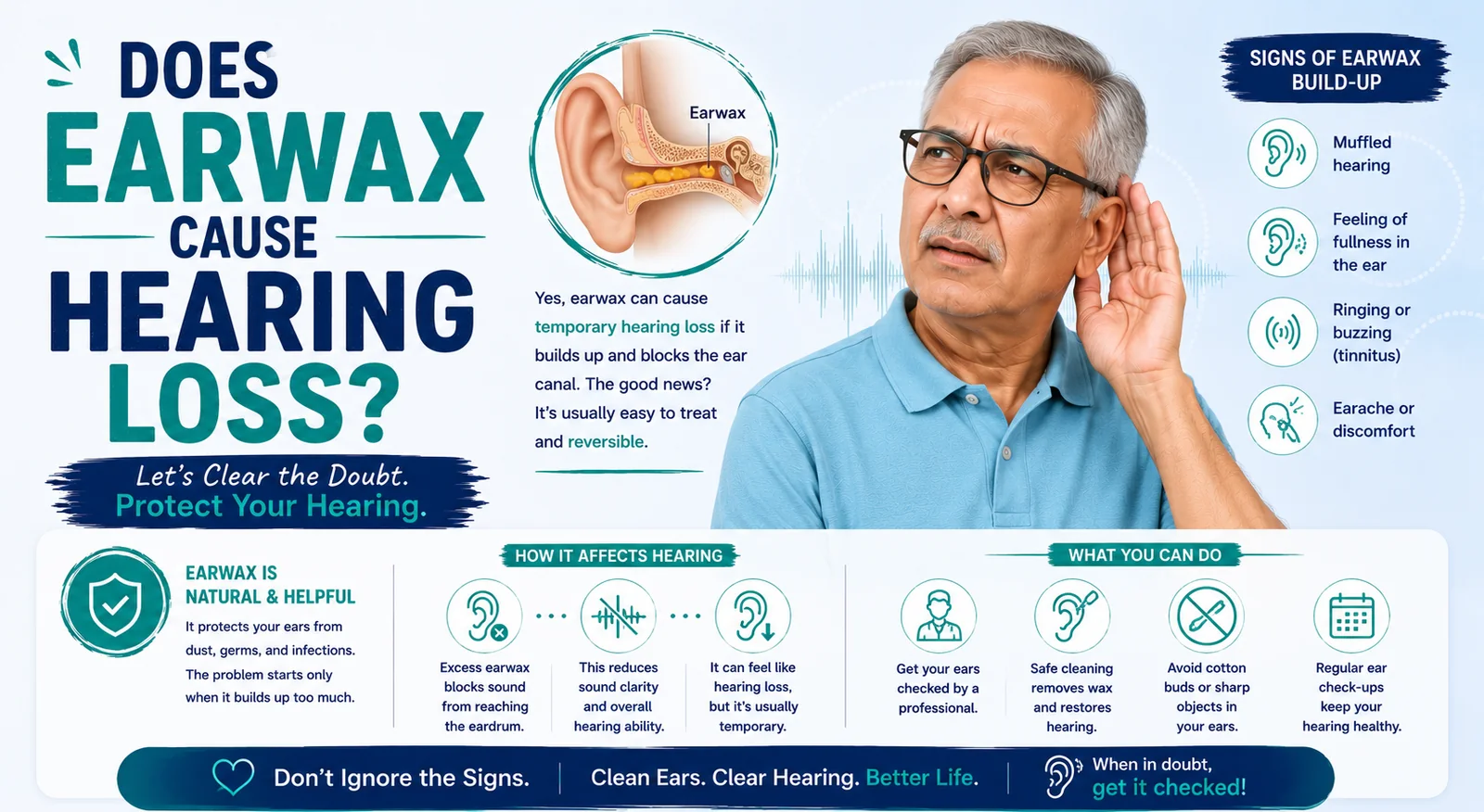
Does Earwax Cause Hearing Loss?
Yes, excessive earwax can temporarily block hearing. Learn why it happens and when to see an audiologist.
Jul 4, 2026
Bengal Rehabilitation Group
My Father Keeps Increasing the TV Volume. Is It Time for a Hearing Test?
Turning up the TV repeatedly can be an early sign of age-related hearing loss. Here's what to watch for.